What made Ander Thomas Jensen’s previous film Riders of Justice so good was its understated approach to characterization. The backstory of the characters of Markus and his fellow crew do not need to be explicitly stated in order to explain their quirks. Their actions and behaviors in the present says it all – for Markus, his time as a soldier operating in a hyper-masculine environment is enough to paint the picture. His own approach to solving the problems of life around him is to bottle up his own emotions and never to confer to others what he is dealing with – which altogether result in even more problems! It is through that tragedy and loss that he realizes that he cannot face his pain and suffering alone, and that he can find solace and comfort in his family and community again – even among others who are not even blood related to him.
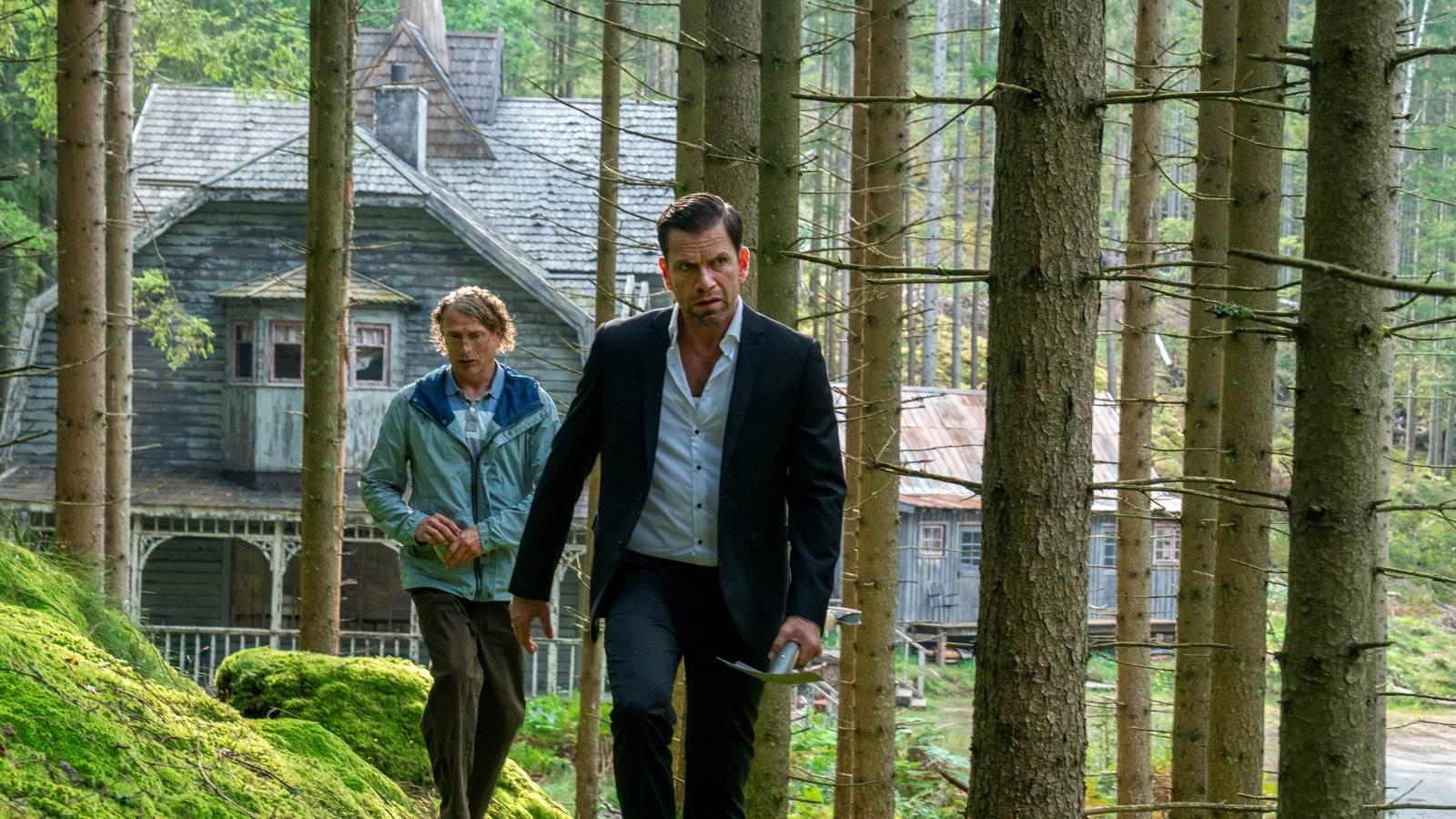
The Last Viking deals with similar themes regarding masculinity and responsibility towards one’s family. Anker is released from jail and is now on the run after a longtime associate of his named Flemming is after him for money. He has nowhere to go, so he turns to Manfred, his gender-bending cross-dressing brother suffering from dissociative identity disorder who is supposed to know where the stolen money is stashed. They find themselves at their childhood home, now owned by an unrelated couple. A lot of hijinks ensue as we see their chaotic relationship unfold – Manfred now goes by John and his memories fleet from one moment to another, and Anker only grows more frustrated with his attempts to salvage what information he can get concerning the money. We later find the explanation for Anker and Manfred’s actions and their relationship to each other is based on their abusive dad. The dad physically beats them, and thus that is what brings them together as well as what drives them apart. The film doesn’t really reinvent that trope, something which I found underwhelming considering how so many films tend to use the abusive dad backstory to fill in for unimaginative storytelling and writing as well as a psychological oversimplification for a character’s own actions and behaviors.
Mads Mikkelsen’s acting is what gives his character so much nuance despite all this – in many ways the whole dissociative identity disorder being tied to Manfred’s own queerness could have insinuated something more problematic given the history of tying queer identity to mental illness and its stigma. The film’s treatment towards femininity also felt slightly problematic especially with the violence against women which also includes Manfred/John as a very queer-coded character, specifically when Margrethe is beaten to look just as ugly as the husband she complains about as well as the appearance of Anker and Markus’ sister Freja, whose significance does not factor in until her own torture under Flemming’s hands.
Having said that, The Last Viking does sometimes have its funny moments in terms of the dynamic between Anker and Markus as well as the absurdity of resurrecting the Beatles through the other ragtag group of patients who have escaped the mental hospital where they came from. That being the case so long as it is not clashing against the more serious and intense subplot involving the Flemming character chasing after the two brothers. In that regard it is fine – if only it could have been better.