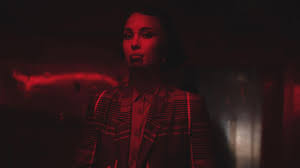
Kahlil Joseph’s latest film is an experimental video essay in form. Using cinema as a journalistic platform to explore other artistic forms and mediums within its confines. I was familiar with some of Kahlil Joseph’s installation work and his collaborations with musicians like Kendrick Lamar, Beyonce and Flying Lotus. He strikes a delicate balance between operating at the mainstream level through the exploration of black culture and popular music through various visual mediums, and fearlessly striving for something more creatively through some of his other works that steer towards the abstract and avant-garde, for which I would consider BLKNWS as part of that category.
The Encyclopedia Africana book as the opening shot frames the very encyclopedic structure and nature of the film and the way it references so many different sources and individuals across books, archival footage of decades ago, the social media posts and videos of today, a funny Vivre Sa Vie clip with the incorrect subtitles talking about Wu Tang Clan and even a podcast segment. This combined with the Afrofuturist segments that take place on a cruise ship involving actors speaking on all things black art, culture and identity framed through the early history of Africans arriving in the Americas through slave ships to contemporary times. The film also sometimes makes use of text descriptions from the perspective of Joseph himself, going through his own family history and his connection to the very historical figures and art that the film explicitly mentions – individuals such as W. E. B. Du Bois and Wole Soyinka as well as many other black thinkers.
I’m not someone who is well-versed in the scholarship surrounding the African diaspora and black culture and thought. I was speaking to someone earlier about this film and I did like the point that was raised concerning omissions of gender in this film, especially given its Afrofuturist angle in a current time when subject matter concerning queerness has become part of the dominant mainstream cultural discourse in general including black scholarship. Part of this may be Joseph’s own interest in hip-hop especially within a mainstream context, with the usage of the music of artists like Travis Scott plus his own collaborations with people like Kendrick Lamar who haven’t really engaged in that subject matter in a medium that traditionally has not explored it in general. It does leave the Afrofuturism feeling not quite so futuristic despite these characters in the film speaking about and philosophizing the “future” versus remembering the past. Combine that with the rather artificial look of these segments and unimpressive camerawork and they feel really at odds with the other segments of the film that are just referencing others’ works that are topically more interesting and focused.
Like with the Vivre Sa Vie clip, there was an element to the presentation of this that reminded me of Godard in terms of blurring the lines between reality and the fictional and pushing the boundaries of cinema to understand the freedom and the limits of what can be truly expressed within that art form. Godard, however, had a technical mastery of filmmaking that is evident in his works through his ability to express what is in the frame that goes beyond what words can describe. The camerawork and production design especially during the Afrofuturist segments just simply cannot compare. I suppose as a first feature this was very interesting and ambitious even if I think its shortcomings and pitfalls are evident – and that hopefully Kahlil Joseph can continue to hone in on and refine his craft from here.