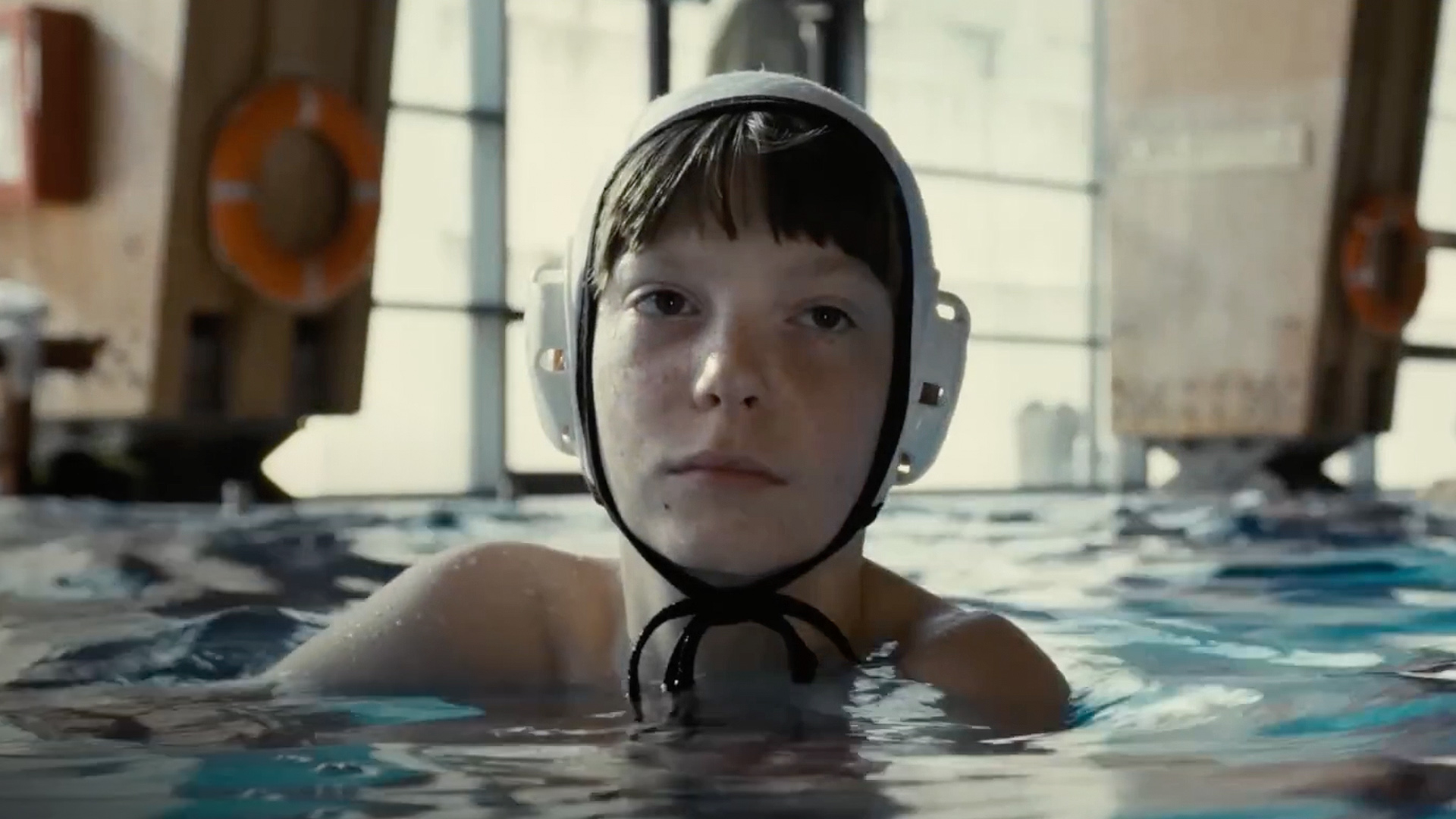
Kids can be mean and terrifying. They’ll come up with all sorts of reasons why they don’t like you, for reasons that may be beyond your understanding (and perhaps even theirs). The type of bullying that is more emotional and psychological than it is physical, the latter often represented in many a classic film that takes place at a school, yet not so much the former. “The plague” is like what the “cooties” was for me growing up, a label designated to taint you and to isolate you from the rest of the group. Peer pressure dictates you to do reprehensible things to gain acceptance, yet ultimately if they don’t like you anyways then it’s easy to feel like your efforts at gaining acceptance do not matter. Be a tattle-tale, and they’ll get you back even harder. The adults in the room may try to help, but sometimes they can only do so much – you have one of them (in this case, Joel Edgerton’s character as the water polo coach) versus a large group of children. How can the one adult control them all?
The film’s strength lies in its ability to accurately depict and capture the dynamics among boys at that age. The film takes place in 2003, which wasn’t far off from when I began to have my first summer camp experiences outside of Toronto. It wasn’t a water polo camp, but much like the boys in the film we stayed at our own cabin with a camp counsellor or two in charge. I wouldn’t say I felt isolated or bullied by many of the children in the way that Eli or our main protagonist Ben was, but I recall one time we were bringing our tennis rackets and we had encountered a frog on the ground. One of us picked up the frog, threw it up in the air and whacked it with their racquet. Everyone laughed – except for me. I wasn’t laughing, and I didn’t understand why the guy just killed a frog. But unlike Ben in the film, I didn’t want to step in or get involved. I just stood by and watched. Could I have interfered? Should I? Hindsight is 20/20 – after all I was just a kid, perhaps around the same age as the kids in The Plague, and what was I to do when I was also trying to fit in like Ben was? Watching the film does take me back to those moments where I could easily spot similarly rowdy behaviors and the formation of in-groups that is prevalent among settings where kids tend to congregate – namely not just summer camps but also schools. My experience and time at summer camp during those childhood years were mostly very pleasant and a fun escape from the responsibilities of school during those summers – but you also begin to realize the unchecked cruelty that lies underneath. That cruelty is definitely reflected in these kids’ performances, who are absolutely great and convincing in their roles despite the fact that none of them were alive in 2003. I speak not knowing exactly how summer camps are being run these days – technological addiction may present a different challenge for children and for their camp counsellors to deal with than it was before, but the foundational cruelty remains all the same.
I’m a little torn on the ending, which clearly feels like a nod to Carrie’s climactic party sequence. The quick escalation of events feels a little too quick, considering how Ben suddenly turns on Eli and the body horror aspect of the film becomes quite evident in contrast to what came before it. We are left with a rather pessimistic message concerning Ben’s fate and his change in perspective (dancing like Eli did) that feels at odds with Joel Edgerton’s character’s well-intentioned, if also very generalized spiel to Ben that life indeed does get better. Does life get better for Ben after all of that? For Eli? Or is Ben just simply perpetuating the very same cycle of abuse and bullying that his peers are very much a part of? I’d be curious to know what happens to Eli afterwards many years down the road. But for me personally I’m just glad I was able to move past all those experiences – both the good and the bad.