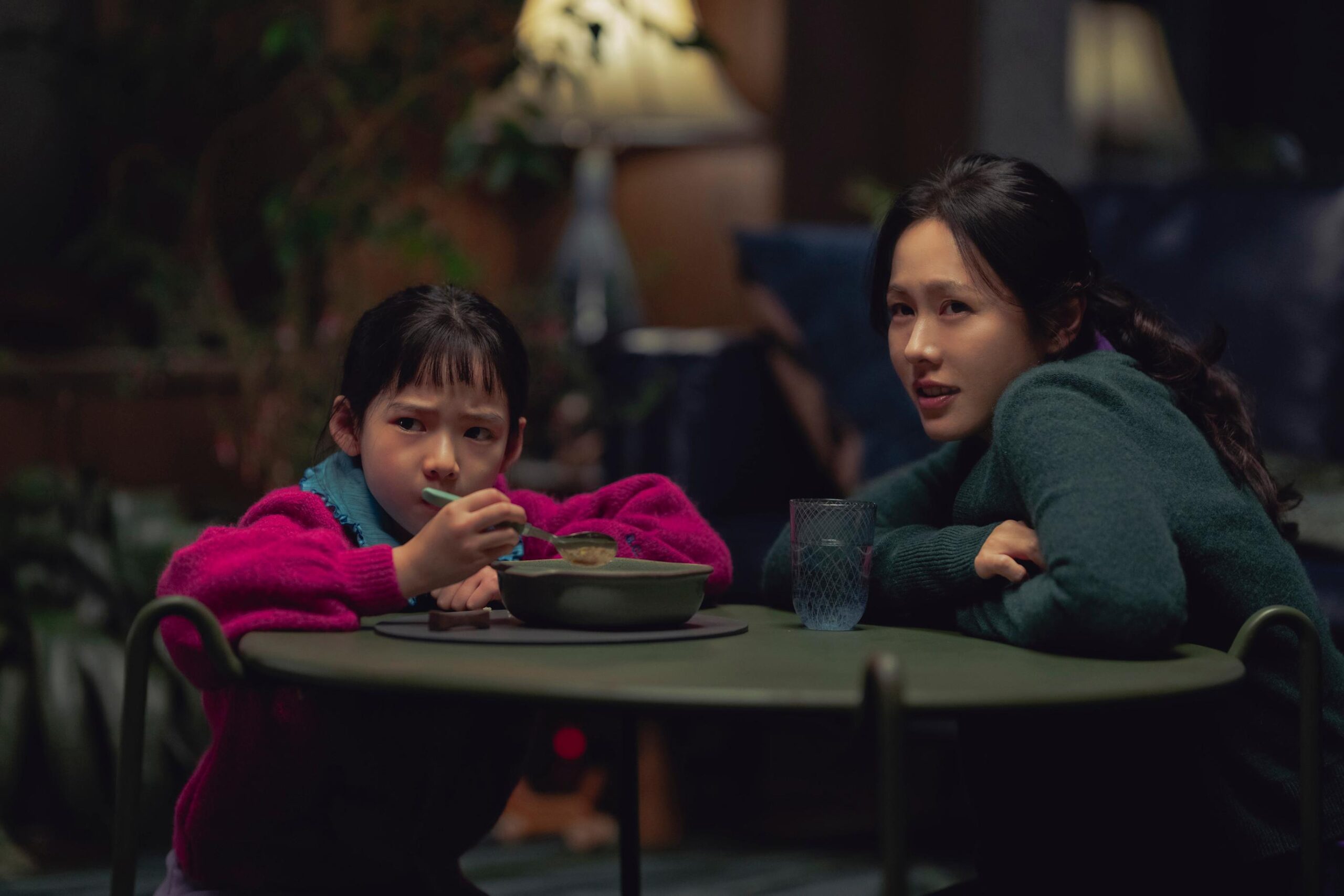
Park-Chan wook does his own take on the Parasite-type thriller with No Other Choice. Thrillers involving main characters doing whatever it takes for their family to survive and rise up the social ranks definitely speak greatly to current economic and political circumstances, not just in Korea but elsewhere.
Yoo is an everyday family man who made his name and fortune off of the paper and pulp industry, a dying industry given the mass transition into using digital devices. After serving for 25 years under Solar Paper, he is suddenly laid off. He has three months to find another job in order to keep up his lavish lifestyle, avoid foreclosure of his house which was also where he grew up as a child, be able to afford to keep the family dogs as well as keep his wife and children happy.
The job hunt hasn’t been going too well for him. He takes a menial job as a supermarket clerk for a year, while his wife gets a job as a dental assistant. His wife meets a young co-worker and they seem to hit it off quite well, causing further jealousy and fear that he will lose her. He goes to the offices of one of the rival competitors in the paper industry, Moon Paper, and tries to hand his resume to the foreman in the washroom only to be embarrassed – because after all, it’s silly and quite desperate to be doing this in the washroom after all. Frustration sets in and he devises a scheme on how to obtain that job. The only way, according to him, is to eliminate the rest of his competition. Find out who they are, dive deep into their lives, and kill them off one by one without tracing it back to him. Sounds like a plan.
For a film that runs almost 2 hours and 20 minutes in length, the script and pacing feel airtight from the initial setup of the plot to him executing the plan in the second half. There’s a certain comedic tone to it as well that feels very similar to Parasite, especially given the themes here. Although both films deal with the subject of social engineering in a different way – with Parasite the emphasis is on a family trying to ingrain themselves into the upper echelons by any means necessary via cheating, deception and eventually murder. In No Other Choice, the family is trying to maintain their status in the upper echelons through any means necessary via the same methods.
This status in some respects also shields our protagonist Yoo from the consequences of the law and the police. We get a few scenes where police investigators come in to question him and try to connect the dots – understanding his own ties to the paper and pulp industry as well as the victims who were murdered, even remarking on a slip-up where Yoo accidentally reveals that they were dead when all the police knew was that they had disappeared. The police let him go, but the wife clearly knows and understands what has happened.
The only thing that would make for a fatal flaw in Yoo’s plan is the social networking and connections aspect to the job hunt. I don’t know if this was something that was mentioned during Yoo’s own research and planning, but there is always the unpredictable aspect of candidates getting preferred over others on the basis of the hiring committee knowing one candidate over the other regardless of their accomplishments and experience on paper. A more interesting ending would have asked the question; how much killing is enough? Would he have ever been in a position to get the job to begin with if other candidates started to pop up?
Nevertheless the ending we got still is an interesting one; he gets the job, arrives at the factory where he is working all alone by himself. Automation and robots have replaced human manpower – all he needed to do was tend and maintain wherever necessary. He got what he wanted and gets to keep his house and dogs, but was it worth it? The isolation, the fact that his family knows what he did, the fact that there is a body buried in the very yard of the house?
Part of me does feel like this material seems very within Park-Chan Wook’s comfort zone. There aren’t going to be any big creative risks taken or unexpected creative detours from a film like this – and perhaps that may disappoint some who may be expecting more from him, or who would be looking for something different. But sometimes you have to appreciate a filmmaker who is in his element and who knows he can nail this sort of thriller every time. Count No Other Choice as another win for Park.