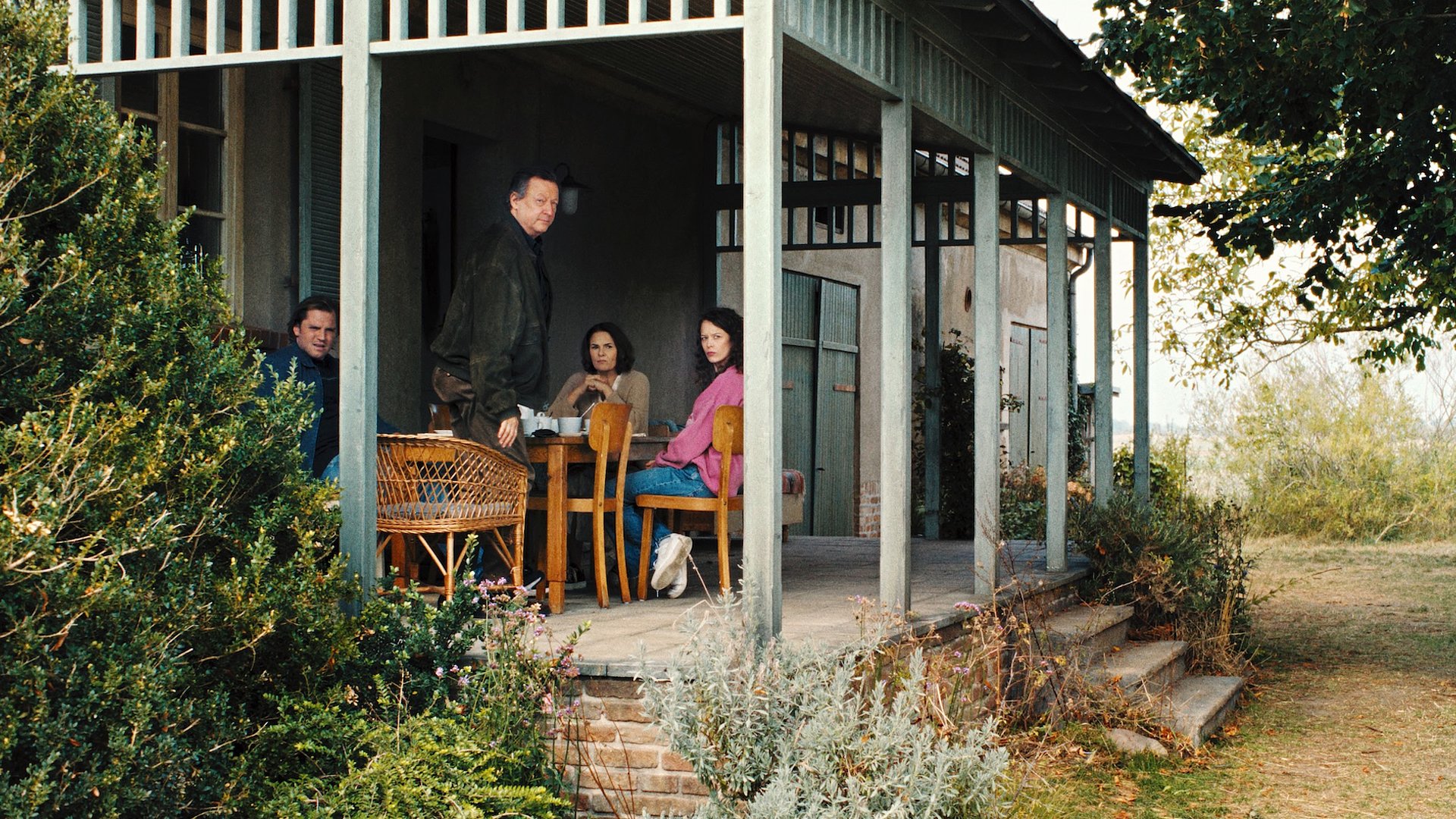
Miroirs No. 3 hits all the notes you’d expect from a Christian Petzold movie. You’ve got the doppelganger stuff from movies like Phoenix, plus it’s not Petzold without a good bicycle riding scene out in the back country and another collaboration with his current muse Paula Beer. But sometimes it feels all too familiar for those who are even slightly acquainted with Petzold’s filmography.
The premise is that Laura (played by Paula Beer) gets involved in a car accident – prior to this we see her locking eyes with Betty, an older woman whom she passes by on the countryside. Betty eventually takes Laura in after recovering from the ordeal. Laura eventually meets her husband and her son, and soon it becomes quite apparent that Betty is essentially using Laura to fill in for her daughter who has passed away. Unlike the approach Petzold takes with Phoenix, the movie is less about the Vertigo-style doppleganger mystery and more about the grief and trauma the family has to endure and process. From first losing their real daughter, to then seeing their daughter in Laura as Laura assumes more of that role within the family, to feeling like their daughter is gone again after Laura leaves the family amidst an irreconcilable conflict. There are a few tension building moments like the dishwasher machine exploding, and I also liked the slightly creepy turn of events when it’s the family instead engaging in a little bit of voyeurism, trying to keep tabs on Laura after she leaves the family to return to school with the mom filming her and even getting the whole family to attend her music exam performance.
It does requires a lot of buying into the idea that Laura as a character has no other life or existence beyond serving the family’s needs. To me I don’t think the film overcomes that hurdle, and thus the emotional payoff wasn’t quite as strong especially in contrast with Phoenix where the character motivations were much stronger. I suppose you can infer that Laura was looking for a family or a sense of community especially given her boyfriend perished in the accident, and she herself looks like she either doesn’t have anyone to reach out. Either that, or she is willingly choosing not to contact others close to her for the sake of the family. But it does make the entire thing seem a little odd – it’s a little unbelievable that someone in her position wouldn’t have friends or family to speak of – she did have a boyfriend who perished in the same car accident after all, so she must have some other support. And if she does have people she could have reached out to or could have stayed with in the interim, why didn’t she do so?
It’s a bit of a minor work in Petzold’s catalogue, and even more so at its brisk 86 minute pace. But a lot of the Petzold-isms are there and those who enjoyed his past film Afire and prefer the Rohmer-inspired direction his recent films have taken might get a lot out of this.