I have a lot of respect and admiration for Claire Denis as a filmmaker and an artist. Given her pedigree and the films she’s made over the years, who wouldn’t? So I was quite excited for this one coming into it. In the end, I don’t think it was as bad as some people are making it out to be based on the general reception the film has received thus far, but of course it’s natural to only come away from this wanting more.
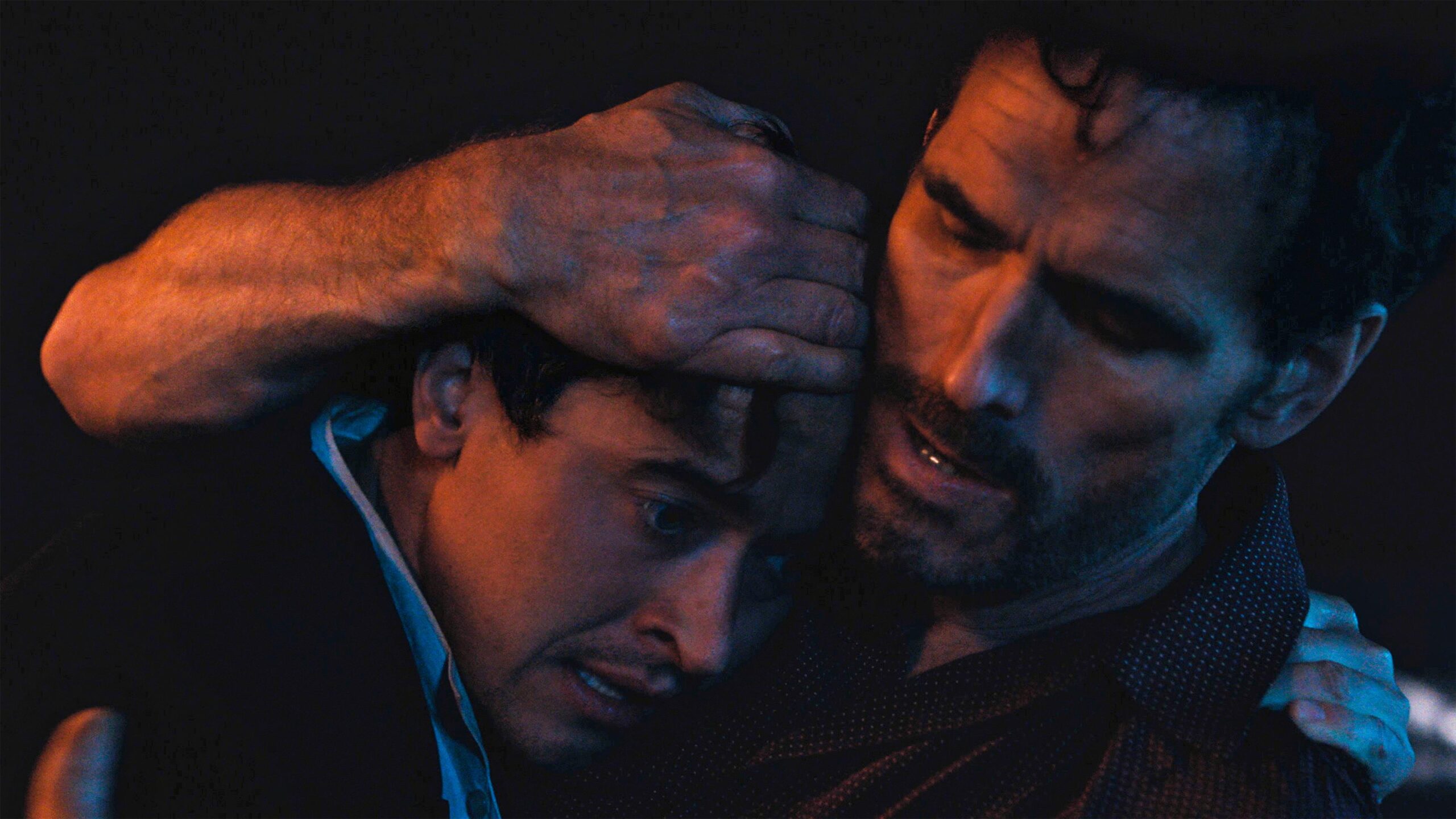
The anti-colonialism messaging that is so significant to Claire Denis’ work is certainly there in The Fence and remains a primary focus considering Denis’ background growing up in West Africa before moving to France, which this film’s story also takes place in. The premise involves a conflict between construction site manager Horn and a mysterious man who appears on the other side of the construction site fence. This man is looking to retrieve the body of his brother who died earlier that day in a work-related accident at the construction site under Horn’s management – an incident that Horn is trying to cover up. The man will not leave until he has the body.
I like the fence used both figuratively and literally as a way of illustrating that divide between class and race. For Horn, he believes money can solve all problems, even matters of life and death. He is more concerned about driving away the man standing on the other side of the fence who just wants to bring the body of his brother home, who just so happens to be the construction worker that was shot dead by Horn’s engineer Cal in an act of rage. Horn is more concerned about trying to hide his own skeletons in the closet – by pretending it was a work-related accident rather than a murder – rather than do the right thing and honour the man’s request. But until that request is honoured, he’s got all the time in the world to stand there by the fence. He has no need for Horn’s bribes, because to accept those is to insult his own blood. Family is more important than what money can buy. Here we also see Horn’s own obliviousness to his own lack of community and support around him – all he has are his hired goons who are there to protect him and to finish the jobs that he wants done at the construction site. He brings his girlfriend out to visit and stay with him at the site, yet it doesn’t seem like the girlfriend is very eager to be there and in the meanwhile takes a liking to Cal. That in turn causes more friction between Horn and Cal.
I’m also a sucker sometimes for any film set within one location that doesn’t try to deviate much outside of that one location – which for this film certainly is the case (minus a couple of scenes). But of course, the one-location premise does hint that this was adapted from a play, which was originally in French. It sounds like Denis and the other screenwriters may have had a hand in translating the original dialogue to English, which results in some very odd, if also funny lines of dialogue. The “I used to drink milk” line Horn delivers randomly as his girlfriend grabs some glasses to pour alcohol got some confused laughter and reactions from the crowd, as well as a few others (the allusion to oil and everything underground “turning on” Cal is certainly another line).
Yet all of this isn’t quite as distracting as the thought that perhaps all of this could have been avoided if Horn had just let him continue to stand there and not kept on engaging with him. He even gets into it with Cal, who fires his gun within the vicinity of the man – not a particularly smart move when you want to cast aside any doubts of wrongdoing (as is the case towards the end when the man ends up acknowledging that his brother was murdered before the body is brought back to him). I guess the point is that Horn is a human being with a conscience – even if the man isn’t doing anything besides just standing there unmenacingly. And that Horn isn’t a very smart man after all.