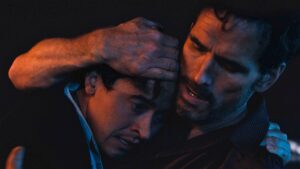
This is really my first introduction to the work of Rhayne Vermette – I had not previously seen her debut feature Ste. Anne. I was, however, acquainted with her previous short film work involving animation and analog film experimentation. Very abstract, dark and eerie, sometimes surreal in the way David Lynch can be. Leaves quite an impression no matter how short the length is.
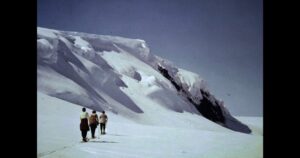
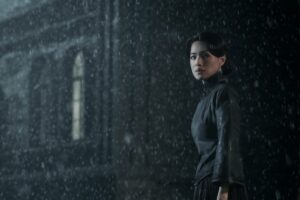
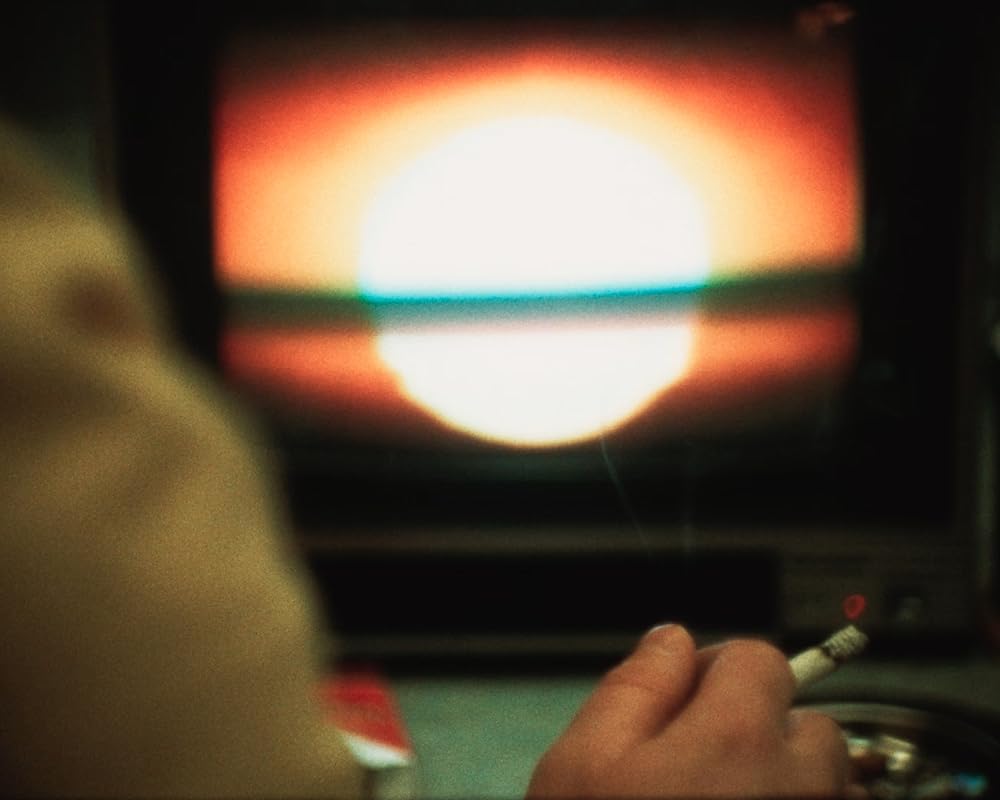
Levers is Winnipeg experimentation at its finest, in line with the tradition of filmmaking there. The bleak snowy winter vibes where the sun never shines, the mystical imagery, plus the rituals and traditions we partake in between the statue unveil at the beginning of the film to a funeral. We see characters desperately hoping for the sun to rise again. All this in a world of death and despondency, where people are holed up in their homes watching television on repeat away from the snowstorm – does this not remind anyone of what COVID was like?
Not a lot of dialogue here, so a lot of this relies on the 16mm cinematography which is beautiful in terms of color contrast even during the dimly-lit and often underexposed nighttime sequences. Colorful and vibrant for a film that involves this much negative space in many of these shots. There are aspects here that capture a very surrealist energy – the standing stone appearance in particular reminded me of Mark Jenkin’s Enys Men, another movie where a standing stone plays a more prominent role. Some comparisons as well to Inland Empire, albeit without the close-up shots of distorted faces that film has.
I’m still not totally sure about the significance behind some of the other aspects of the film, including what appear to be tarot-style drawings distinguishing different sections of the film as if they were title cards for each chapter. Drawings denoted with such titles like “The Sculpture” or “The Sun” just to name a few examples, which I suppose connect to certain subjects that we see in the movie. The director Vermette herself mentioned during the Q&A that she was considering redoing those drawings – perhaps the replacements may be more enlightening as to their meaning and what they add to the film. Maybe some folks will be turned away by the lack of explanation or reasoning for their inclusion, but that feels like too much of a minor quibble in the grand scheme of things.
I also wanted to know more about the details in terms of how they managed to put this together using broken Bolex cameras. The fact that they did not work with a script at all during the shoot certainly makes the final result very impressive, and I look forward to seeing whatever Vermette conjures up next.