It’s not too often that you get slow cinema that feels this grand and epic in scope. Such is the case with Magellan, which admittedly is my first experience with a Lav Diaz film. I’m generally not against exploring slow cinema – but in the case of Lav Diaz I’ve had trouble trying to get into a lot of his work considering many of his films stretch 4 hours or even longer, plus a lack of theatrical screenings of his films here in Toronto. With Magellan coming to TIFF and it standing at under 3 hours – a short film by Lav Diaz standards – I figured this might as well be the time to get myself acquainted.
We start with a lot of long-takes observing the aftermath of violence and bloodshed caused by Magellan and his crew. It’s very clear that Lav Diaz (especially as he emphasized during the Q&A) was very keen on exploring the effects and impact of colonialism particularly in his home country of the Philippines, in no part due to explorers like Magellan coming from the other side of the world wreaking havoc. While some people may complain about the lack of dynamic camerawork, I found the blocking and staging of these shots to be quite nice and vivid enough to grab my attention throughout the whole movie. The way corpses are just laid out, while Magellan and his crew stand above, almost as if they are triumphant in a sea of meaningless brutality. This violence and killing also applies to his own crew on the ship who disobey or are sloppy with their work – no one is above Magellan himself.
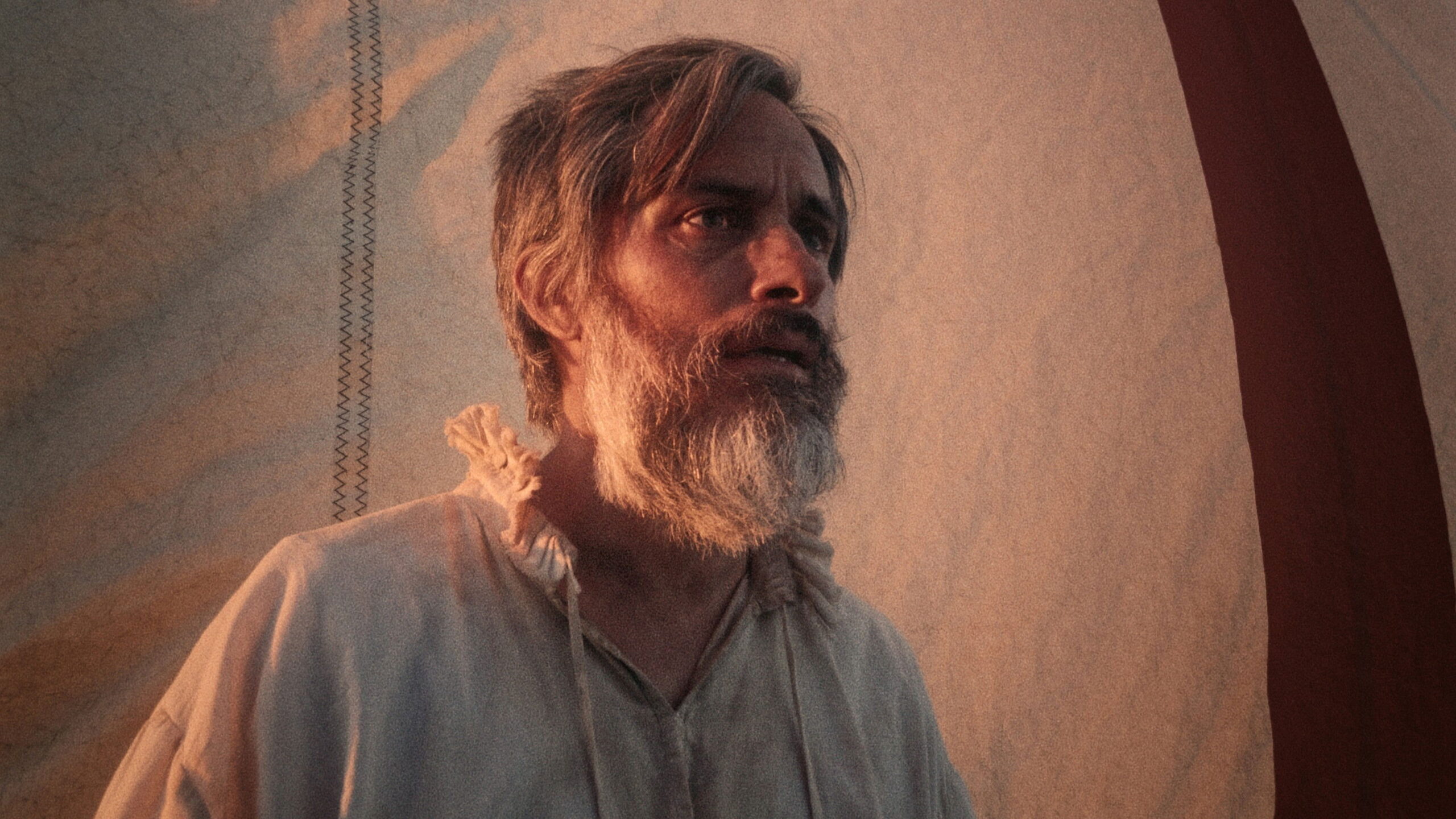
This portrayal of Magellan certainly does not present him as a hero – rather he is quite tyrannical. I recall learning about people like Christopher Columbus in my younger years of history class, reading about the first European settlers in North America and how as I got older I began to realize how much of the terrible stuff was glossed over during my own education. The diseases and the slaughtering and massacres that have killed so many Indigenous natives on the continent. When Magellan and his crew sets sail, there is nothing triumphant or celebratory. He goes to different places where people of a different background inhabit, he tries to indoctrinate them into Christianity, and when the inhabitants do not listen or revolt he slaughters them all. Another interesting observation: he says he is there to serve the orders of his King and yet we never see the King during any part of the film, which only serves to reveal the disconnect between Magellan and anyone else.
The final moments are most telling – after a fight breaks out between Lapu-Lapu and his people, we see Magellan getting up all bloodied, standing there alone amidst the never-ending sprawl of corpses. He pauses, as if to assess what he has done before collapsing on the floor again and later dying from his wounds. In many ways a tragic, yet also befitting end to one of the most significant explorers throughout human history.