I was first introduced to Sophy Romvari through her short film Still Processing, her master’s thesis project while she was studying at York University. That film is about her grieving through the loss of her brothers as she is seen looking through old family photographs. There was something incredibly raw and authentic about putting herself on camera and reliving those emotions in the moment as she’s going through those memories, although the approach to set up the camera at a given location, to prepare the scene in a certain way and to capture her feelings in that moment may feel like all of it was “staged” or set-up to elicit those feelings out of her as opposed to having it be spontaneously natural and in-the-moment. This comment isn’t to doubt the authenticity of what she was feeling during that moment – but I don’t think it had that same impact for me as I’m sure it was cathartic for Ms. Romvari to make that film.
Catharsis and self-therapy find themselves at the core again in Blue Heron, which tells a similarly semi-autobiographical angle of the same subject matter concerning what it is like to deal with the loss of a loved one, but also how their struggles they dealt with in life naturally become part of your emotional burden and trauma long after the fact. The first half of the film deals with our main protagonist Sasha’s childhood memories growing up and spending the summers with her friends and family. Playing around with the sprinkler, watching television at home and even learning how to develop photographs in the darkroom. When Jeremy is there during those moments, sometimes it’s all fun and games. But contrast that with the bad moments where Jeremy starts lashing out, and things can get sour very quickly to the point where even the parents don’t know what to do, try as they might. Eventually Jeremy finds himself in trouble with the law for shoplifting, gets a diagnosis for oppositional defiant disorder and the advice they get from social services is a hard pill to swallow: send him out to another foster family.
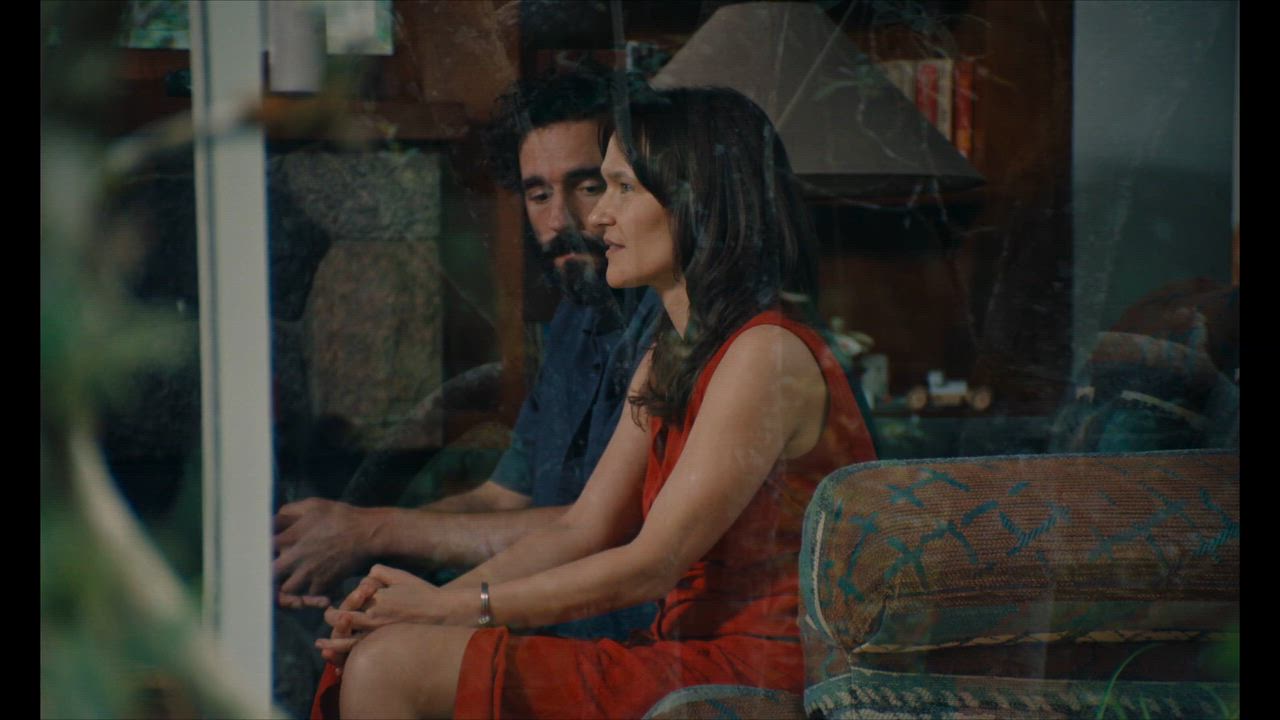
I think the decision to pivot to a fictional mode of storytelling for Blue Heron works better in that instance without the risk of it feeling too distracting, even if it’s clear that all of this is borne out of some very real and traumatic experiences that were front and center within Still Processing. Sasha can be read as a reflection of some of Sophy Romvari’s own experiences and her own feelings grappling with the trauma and loss of a close relative in her life. There are moments involving a grown-up Sasha who revisits her old family home as if she were going back in time, placing herself in the position of the social worker who made the initial visit and call to take Jeremy away from the family. You seek to understand everything that happened, wanting to do everything you can for this loved one (in this case Jeremy), and in this case those questions end up defining your own life trajectory. Sasha, much like Romvari herself, becomes a filmmaker and develops a project that seeks to explore what really happened to Jeremy. In one particular scene that blurs the lines between fictional and documentary, Sasha invites real social workers at a round table to assess her brother’s case in the hopes that more insights can be found into why Jeremy was the way he was. One of them admits that even to this day, the resources are inadequate to support someone like Jeremy – such would have also been the case 20 years ago when Jeremy was alive and still with her family.
It’s a lovely film to look at and certainly also cuts deep by the end upon the revelation that Sasha has truly lost Jeremy forever, despite all her efforts. It’s quietly painful and devastating in that regard, without needing to come across as flashy or showy. It’s about the pain we hold onto for much of our lives, that no amount of emotional displays or outbursts can resolve. We can express our love, but sometimes it is not enough. We can seek to explore the past as much as possible, but there is the risk that it’ll only raise further questions for which there are no answers or solutions to.