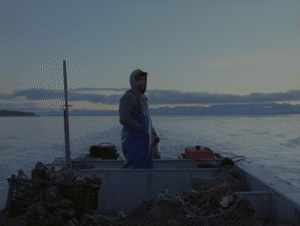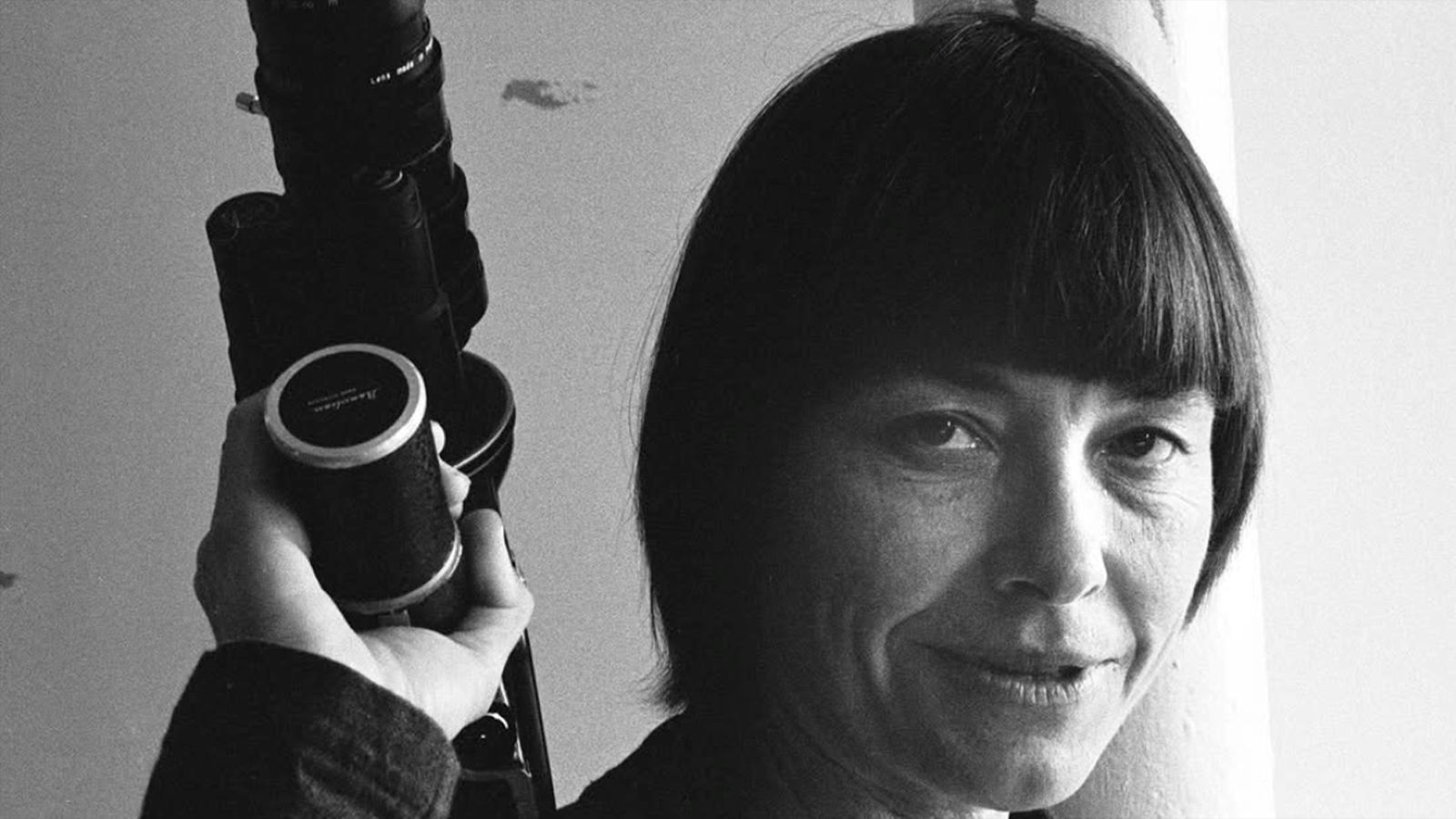
I was reminded of a short film, A Month of Single Frames directed by Lynne Sachs, who collaborated with Barbara Hammer on the film just shortly prior to her death in 2019. The short film consists primarily of footage Barbara Hammer had shot decades prior, as well as audio recordings and written diary entries from that time which she bequeathed to Lynne Sachs and gave her free rein to do whatever she wanted with that material. The short film is brought up again in Barbara Forever, if only for a brief moment. In a way, Barbara Forever feels like a continuation of the artistic philosophy of Barbara Hammer towards the end of her life, like an extension of Barbara’s own creative process even after she is no longer here with us.
Director Brydie O’Connor has gone a great job of combing through the 400 plus hours of archival material (according to her Q&A) to weave together the life story of Barbara Hammer, using primarily footage that was shot by her, photographs and other artwork as well as voice recordings from her over the years that are worked into the film as narration quite seamlessly. There is only one portion of the film revolving around her long-term partner of over 30 years, Florrie Burke, that was shot more recently and seems separate from Barbara’s own archival recordings, but other than that this documentary does not take on the typical structure revolving around talking heads telling us why someone like Barbara is important. And it’s not necessary to have those sequences when Barbara herself can tell it all for you. Much of this is told – rather cohesively and coherently – through the lens and voice of Barbara Hammer herself, across different times and different places, including old photographs prior to her own realization that she was a lesbian to the exploration of her own filmmaking journey. It’s almost as if the movie makes itself, or rather that Barbara Hammer herself could have co-directed this with the amount of material here that is solely hers. The approach here works quite effectively at continuing Barbara’s legacy as if this was created by somebody close to her who knew and understood her in the vein of a close collaborator, even though O’Connor herself admits that she hadn’t begun working on Barbara Forever until a couple years after her passing.
The film also allows us to glimpse at Barbara Hammer’s life in its intimate details through the use of a lot of private recordings and photographs that wouldn’t otherwise show up in her own work. That feeling of sensuality and freedom that embodies her films could also be said for the way she lived her life: ever so bold and confident even up to her old age as her health started to fail her and her artistic endeavours began to shift towards topics that grappled with her own mortality. Yet none of this stopped her from creating and continuing to evolve even after periods in her career where she felt she was not getting the respect that she wanted from audiences everywhere – after all it would not take until Nitrate Kisses, a film that came out in 1992 for her to even get her first ever theatrical release for one of her films. You get the sense that she truly lived life to the fullest, and that she really lived for the art that she was creating even in spite of the challenges she was facing. It’s highlighted quite clearly in the film; lesbian audiences wanted something more straightforward from her, whereas experimental film audiences were not looking for the sort of queer-themed cinema that she was making. She was in between two separate realms of film-making that did not intersect at the time, but it was her own work that showed the endless possibilities when you allow those realms to come together.
The last third of the film does start to suffer from some slight pacing issues – the film does jump back and forth across different periods of Barbara’s life. The approach to rely on archival material does start to hit its limitations once we cycle around similar themes and topics in her filmmaking, and less so on other aspects of her life or her work which she may not have documented – even if her relationships over the years certainly are well documented. But it’s such an emotional and inspiring journey all the way through, and it’s hard not to get teary-eyed as the film covers the final moments of Barbara’s life and her last art installation as we watch her partner Florrie walk through the installation for the first time. It’s beautiful, lovely, touching, and I’m sure you couldn’t ask for a better tribute to Barbara Hammer’s own legacy and career.