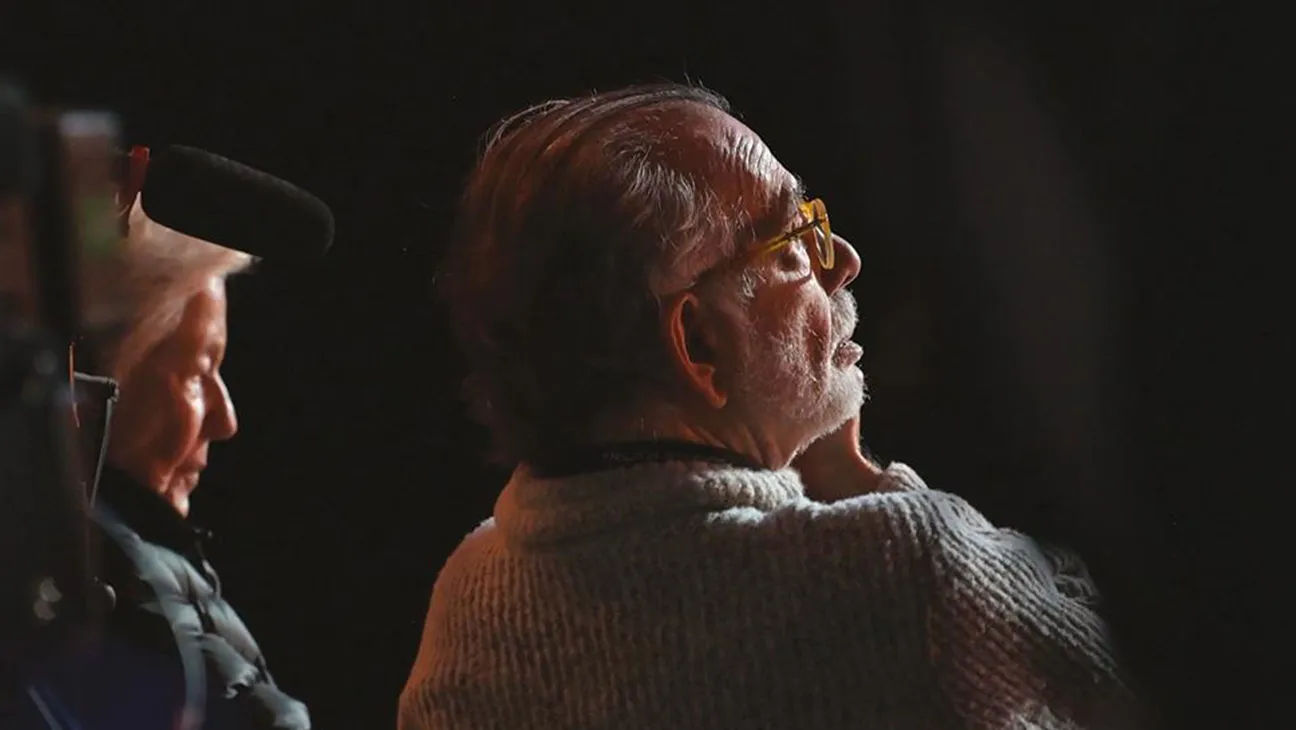
I got to attend the Toronto premiere of this documentary that is about the making of Francis Ford Coppola’s last film, Megalopolis, which soured many critics and film fanatics as far as its reception goes. There definitely aren’t too many films like Megalopolis in spite of what people (and myself) think about it. With the stories that I’ve been hearing and reading about what a mess it was behind-the-scenes, I knew I had to grab myself a ticket to see this.
There were a lot of enlightening and funny moments even if it’s missing a bit of the perspective of some key players like Adam Driver and Nathalie Emmanuel. Mike Figgis himself, who directed Megadoc, also includes himself during some moments when it comes to highlighting the process of making the documentary and his own relationship with Coppola and the Megalopolis shoot, kind of like a meta-documentary in that regard. Those moments do tend to distract away from the main event itself – the very thing we all came to learn about. From Shia LaBeouf beefing with Coppola on every little thing, to Coppola himself acting like he doesn’t care so much about the end result, and much more. As much as Coppola commands respect, you can really tell how out of his depth he is with current conventions in filmmaking techniques. He gets frustrated over the way his visual effects department tries to explain to him why his insistence on a certain approach will not result in a good look for the movie, which results in him firing the whole department. He spends millions upon millions of dollars on a lot of things that makes you wonder how that money is being spent (including $9+ million on trucks just for transportation). He spends hours and hours of valuable shooting time to shine a prism on Adam Driver’s face to see how the effect would look, which later gets changed with digital VFX in post-production (even as much as his strict adherence for practical live effects is very admirable).
There was an aspect of Coppola’s process that did illuminate me on what Megalopolis was supposed to be for him – and by extension for us moviegoers as well. He goes around talking about how he wants to just have “fun”, even in spite of how serious Shia LaBeouf is taking the assignment and is looking to understand what Coppola himself wants. At one point we see Coppola nearly lose control of the situation and trying to reassert his position as the director of the shoot as Shia himself suggests how a particular shot should be set up. Aubrey Plaza, on the other hand, seems to understand the assignment and is clearly having fun every moment of it – her Zoom nickname being “Evil Hag” as she’s talking to Coppola himself is but one instance of that. Coppola’s constant need to play around with the lighting during a shot to see its effect and change, or even to go against his own crew’s suggestion and not care about whether or not the lighting continuity is the same from shot to shot feels like a very experimental approach. He also speaks of his own interest in live theatre and blending that together with cinema, calling back to the usage of a live actor during some screenings of Megalopolis himself, an interest that even dates further back to a movie like Tetro. If Apocalypse Now was about using improvisation and experimentation under dire circumstances to reach the end goal, Megalopolis was simply a playground itself all for the experimentation. Letting the actors improvise whatever – and feeling the movie as it was being made, spending millions of dollars of his own money in order to do so. Perhaps Coppola should look into more experimental cinema.
Ultimately speaking, what I got from this was that Coppola himself is old and out of cares to give. He clearly wanted to make this passion project of his and is trying to keep the fire alive after so many decades, but the energy is not there anymore. The final result is an interesting misfire and a curiosity, one that bookends an otherwise very renowned and well-established film-making career.